
At the BUGNYAR.LAB at the University of Vienna, we take an integrated approach to the study of social behavior and cognition in non-human animals. Although we are interested in a variety of species, our main focus is on two taxonomic groups: corvids and primates.
At first glance, corvids and primates seem very different. Yet, we can find strong similarities in the social behavior and cognitive skills between some of those species, possibly because of constraints and challenges posed by their social life. We try to test this assumption by investigating i) what constitutes ‘social complexity’ in different species and ii) which mental skills go together with different levels of complexity.
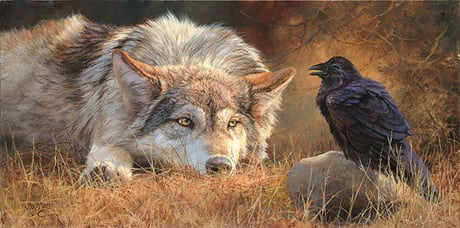
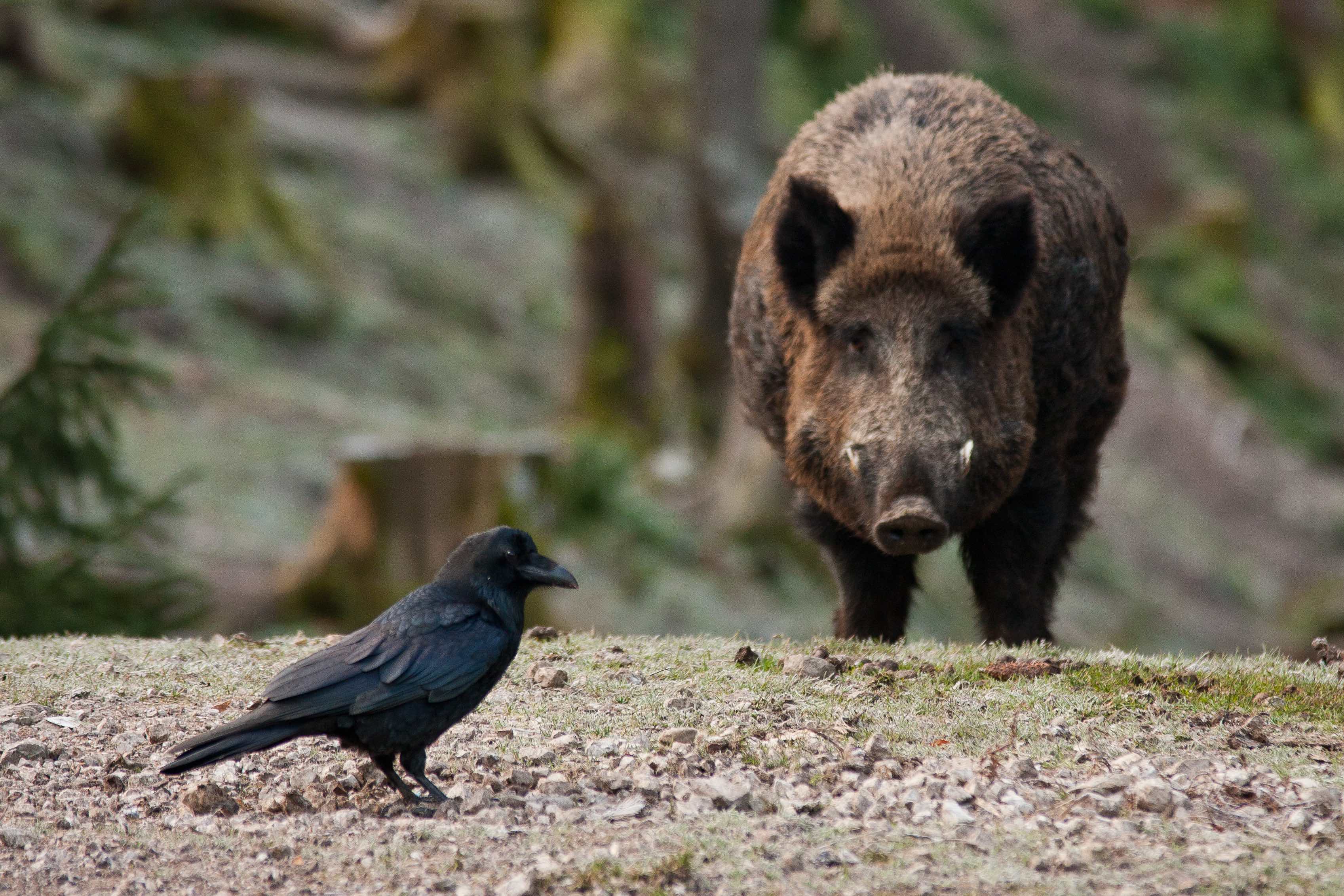
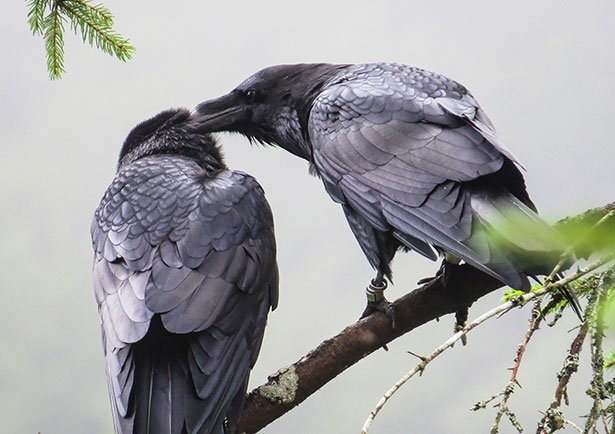
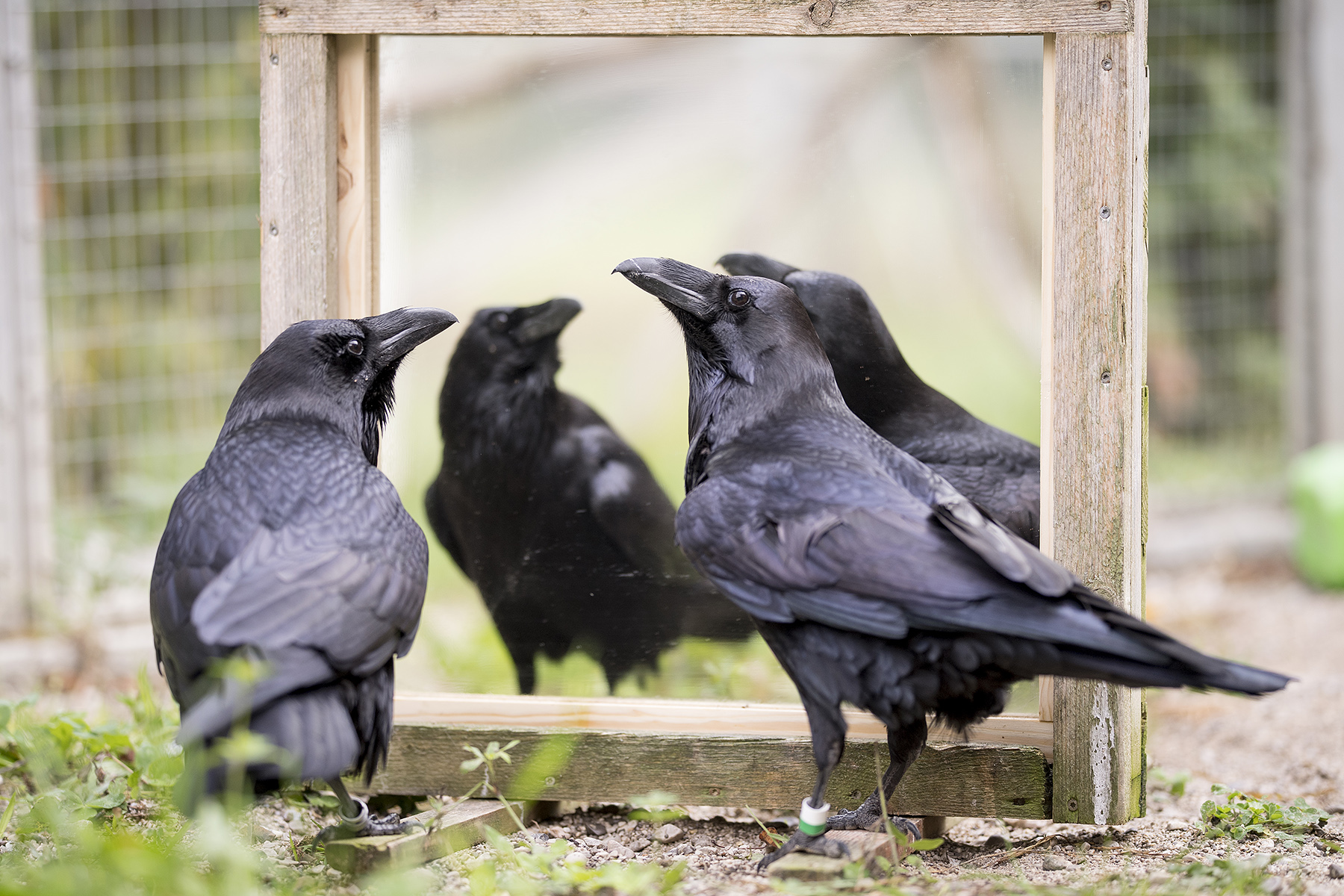
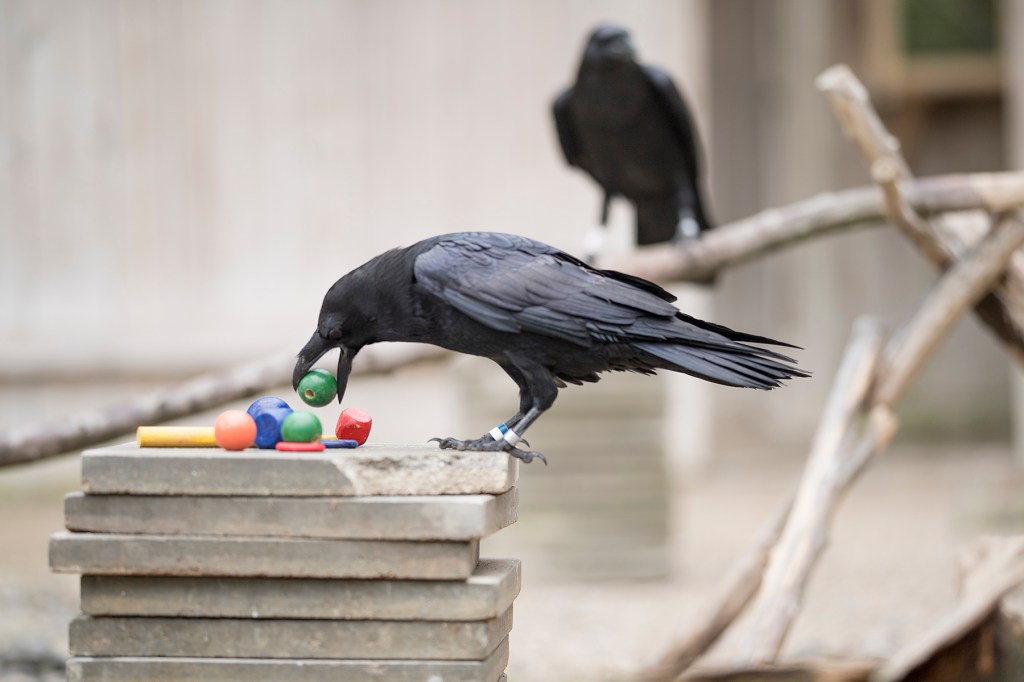
Our main avian model system is the Common raven Corvus corax, the largest member of the corvid family. Importantly for social cognition, their scavenging life style puts them in regular contact with conspecifics and with other, potentially predators, species like wolves, bears, eagles or humans. In addition, we work with carrion and hooded crows Corvus corone and Corvus cornix. These smaller but more abundant sister species of ravens represent a promising model system for studying effects of urbanization.
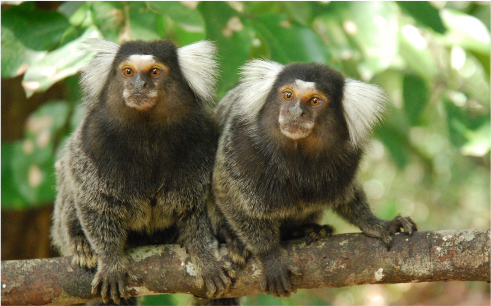
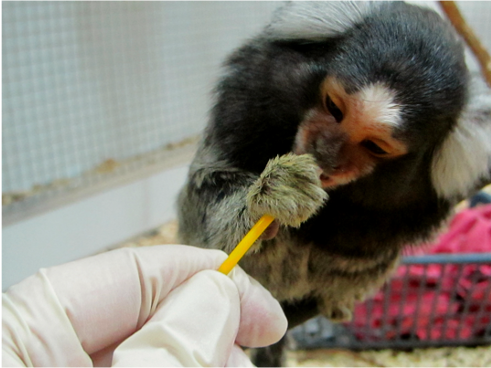
In respect to primates, our main study species is the Common marmoset Callithrix jacchus, a small South American monkey renowned for its high social tolerance and cooperative skills. A corvid species with a comparable social structure is the Azure-winged magpie Cyanopica cyanus, which we had in our lab until recently. For comparative studies within primates, we may use our access to Japanese macaques Macaca fuscata at Affenberg (in collaboration with Bernard Wallner, Lena Pflueger) as well as human children (in collaboration with Lisa Horn).
BUGNYAR LAB AT Konrad-Lorenz-Research-Center
The Konrad-Lorenz-Research Center (KLF) was founded by Nobel prize laureate Konrad Lorenz in 1973 and today represents a modern center for animal behavior and cognition. It is located next to the Cumberland Wildpark in the Northern Austrian Alps and internationally renowned for its unique long-term studies on free-flying Graylag geese, Common ravens and Northern bald ibises.
The corvid research at KLF has started in the 90ies by habituating free ranging ravens to the presence of human observers and by setting up keeping facilities for experimental work with tame birds in captivity. Since 2008, we have intensified our efforts in the field, running a long-term monitoring program with state-of-the-art technology. So far, we have marked about 500 ravens for individual identification and we have tagged about 120 ravens with GPS loggers to track their movements across the Alps. In respect to keeping, the KLF contributes to our captive breeding colony, housing four adult pairs and their yearly offspring.
BUGNYAR LAB AT HAIDLHOF RESEARCH STATION
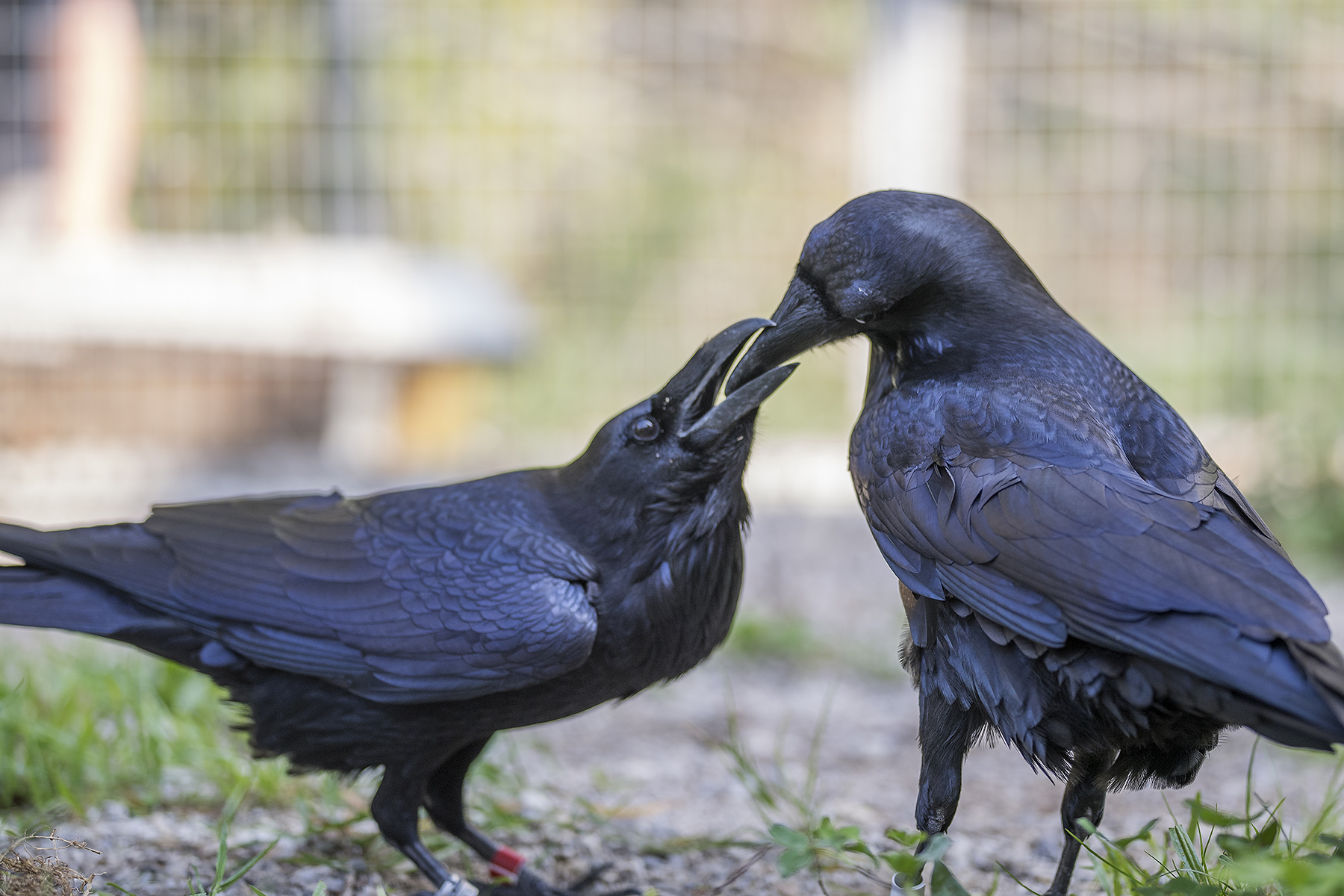
The Haidlhof Research Station was established in 2010 as a cooperation between the University of Vienna and the University of Veterinary Medicine Vienna. Located 45 km south of Vienna, it holds large aviaries for Common ravens, carrion and hooded crows and keas Nestor notabilis, as well as a bioacoustics laboratory for sound recordings and analyses including a video X-ray machine.
The focus of the corvid research at Haidlhof is on behavioral and cognitive experiments under controlled conditions, using state-of-the-art methods from biology and psychology. A key feature of the facilities at Haidlhof Research Station is that we can keep ravens of both social classes, non-breeders and breeders, at the same time. Simulating the dynamics under field conditions, the aviary complex comprises separate areas that can be used by several birds (‘common ground’) or by specific individuals only (‘breeding territories’). All areas are interconnected via runways with doors, allowing us to form/re-unite social (sub-)groups. Furthermore, all areas contain visually isolated compartments for experimental testing. All corvids kept at Haidlhof are hand-raised and trained to participate in behavioral experiments.
MARMOSET LAB
The marmoset lab dates back to the 80ies, when a breeding pair and its offspring (12 adults) were established for cognitive studies at the former department of Theoretical Biology. In the 90ies, the lab was increased (two new families) under the guidance of Prof. Ludwig Huber. Moreover, a collaboration with Brazilian colleagues (Prof. Antonio Souto and Prof. Nicola Schiel) was established to allow comparative studies between lab and field. Over the past 10 years, the lab was further increased and modernized (doubled in space to keep four family groups) and new test-facilities developed.
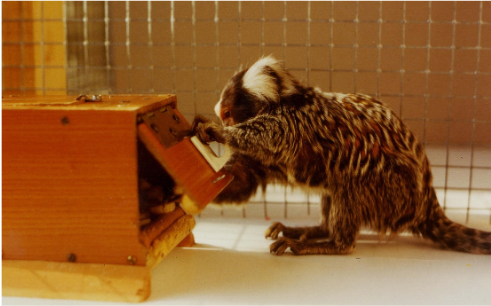
Traditionally, our focus in marmosets has been on various aspects of social learning. Among them are imitation as a key mechanism for social learning, factors affecting social learning such as dominance and food tolerance, as well as the development of social learning skills and the time course of their application. More recently, we have added questions about personality, defined as consistent individual differences, and its link to individual and social learning. Furthermore, we have become interested in the marmosets’ communicative skills.
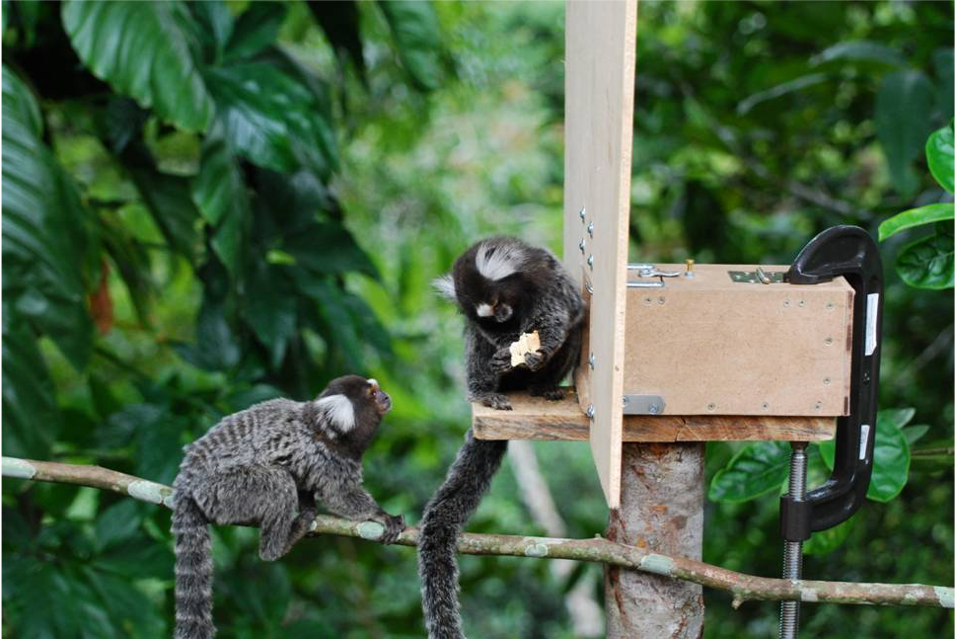
We address our questions on our captive marmoset colony at the University Vienna Biology Building (UBB) and on free-living marmosets at two different study sites in Brazil. The captive monkeys are trained to participate individually in behavioral experiments; the wild monkeys are habituated to visit ‘experimental arenas’ in their social group and engage in our tasks. What is worth to point out is that the life span of marmosets is in the range of 8-15 years and individuals with an age of 10+ are considered ‘old’ – in captivity and the field. In our captive colony, the mean age is currently around 12 years, with the oldest member being 20 years. Hence, we have the unique opportunity to work with some of the oldest animals of this species.
 Bugnyar.Lab